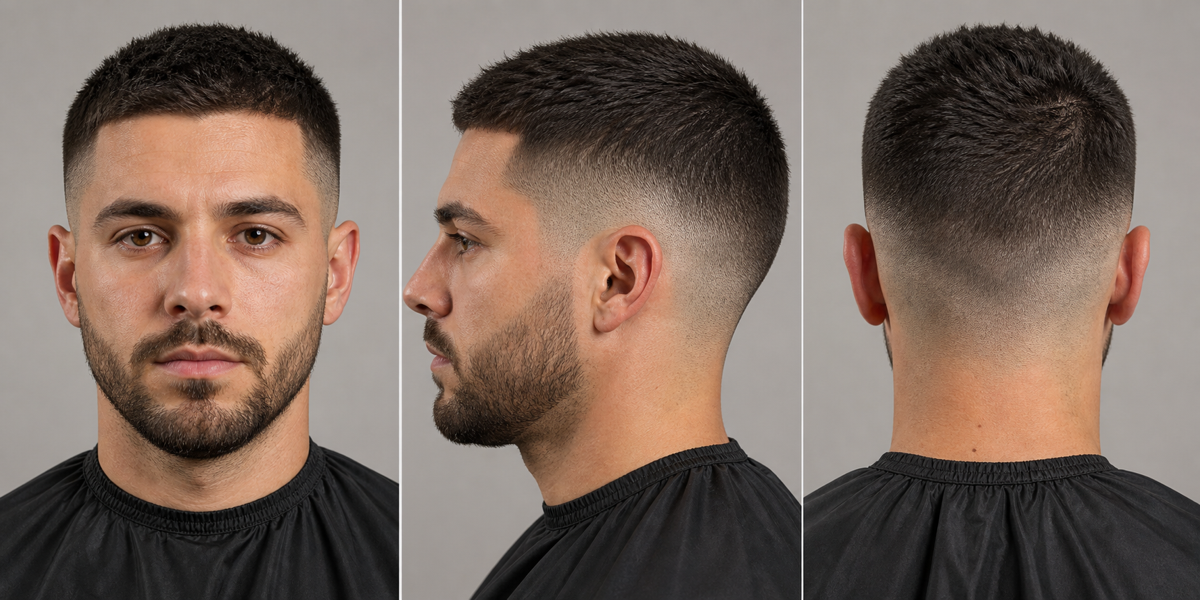
What defines a zero fade?
“Zero” describes the shortest length, not the height. You can ask for a low, mid or high zero fade depending on where you want the transition to begin. The result is close and defined but not fully shaved to the skin.
Hair types and proportions to consider
A zero fade works with short crops, buzz cuts, curls and longer textured tops when you want strong side contrast. Scalp visibility depends on hair colour, density and the chosen height, so use those factors rather than assuming every zero fade looks equally tight.
The editor opens with Zero Fade selected and keeps your photo in your browser.
What a zero fade actually means
A zero fade starts with a clipper set to its shortest no-guard position, then blends upward into numbered guards or scissor length. It leaves very short stubble rather than the bare finish created by a foil shaver or razor.
Zero fade vs skin fade
Choose a zero fade when you want close contrast with slightly less scalp exposure and a softer grow-out. Choose a skin fade when you want the base taken completely bare and are comfortable refreshing it more often.
Low, mid and high zero fade options
A low zero fade keeps the close section near the ear, a mid zero fade begins around the temple, and a high zero fade removes more side weight. The word zero does not tell your barber which of these placements you want.
Zero Fade from front, side and back
Use all three angles with your barber. The side shows transition height, the back shows the blend path and neckline, and the front shows how the top frames the face.
Ad placement
What to ask your barber
Ask for a low, mid or high fade starting at a closed zero blade, then specify what it should blend into—commonly #1, #2 or scissor length. If you do not want bare skin, say explicitly that you want zero rather than foil-shaved or razor-finished sides.
Maintenance and styling
A zero base becomes visibly softer within one to two weeks. Refresh it every two to three weeks for a defined blend, or let it grow into a softer shadow between visits.
Preview it before the barber
The MensFade editor opens with this style selected. Adjust its position and scale on your photo, compare it with the original, then save a barber instruction card.
Preview a Zero Fade on Your PhotoFrequently asked questions
Is a zero fade the same as a skin fade?
No. A zero fade leaves very short clipper stubble; a skin fade removes the base to bare skin with a shaver or razor.
How short is a zero fade?
It starts with no guard, often around 0.5 mm depending on the clipper and lever position, before blending into longer guards.
Can you get a low zero fade?
Yes. Zero describes the shortest length, while low describes where the blend begins. A zero fade can be low, mid or high.