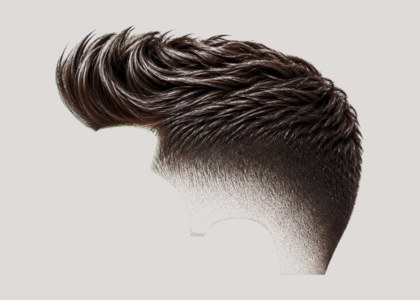
What defines a textured quiff fade?
The front is usually 3–5 inches and forms the highest point before graduating lower toward the crown. Point-cut texture creates individual sections, while a low, mid or high fade controls the amount of side contrast.
Hair types and proportions to consider
Straight and wavy hair with medium density is easiest to lift and separate. Added height can lengthen a rounder outline, while longer faces may prefer a lower quiff with more side weight. These are visual options, not fixed suitability rules.
The editor opens with Textured Quiff selected and keeps your photo in your browser.
Textured quiff vs pompadour
A textured quiff keeps visible separation and a looser front edge. A pompadour is usually smoother, more continuous and carried farther back through the top.
Choose the fade height
Use a low fade when you want more side connection, a mid fade for balanced contrast or a high fade when you want the lifted top to look deliberately disconnected from the sides.
Textured quiff variations
A short quiff needs less styling and creates modest lift; a longer quiff offers more movement; and a side-swept quiff directs the front diagonally instead of straight upward.
Ad placement
What to ask your barber
Ask for 3–5 inches at the front, graduated shorter toward the crown, point-cut texture and enough corner weight to connect the top. Then choose a low fade for softness, mid fade for balance or high fade for stronger separation.
Maintenance and styling
Reshape the top every four to six weeks and refresh the fade sooner if needed. Apply a light pre-styler, blow-dry the front up and back, then pinch sections apart with a small amount of matte clay.
Preview it before the barber
The MensFade editor opens with this style selected. Adjust its position and scale on your photo, compare it with the original, then save a barber instruction card.
See Yourself With a Textured QuiffFrequently asked questions
How long does hair need to be for a textured quiff?
Around 3–5 inches at the front gives most people enough length to lift and separate, with less length toward the crown.
What fade works best with a textured quiff?
A low fade is softer, a mid fade offers balanced contrast and a high fade creates the strongest separation. Choose by silhouette rather than a universal best.
How do you style a textured quiff?
Blow-dry damp hair upward and slightly back, then use a small amount of matte clay or paste and pinch the front into separated sections.