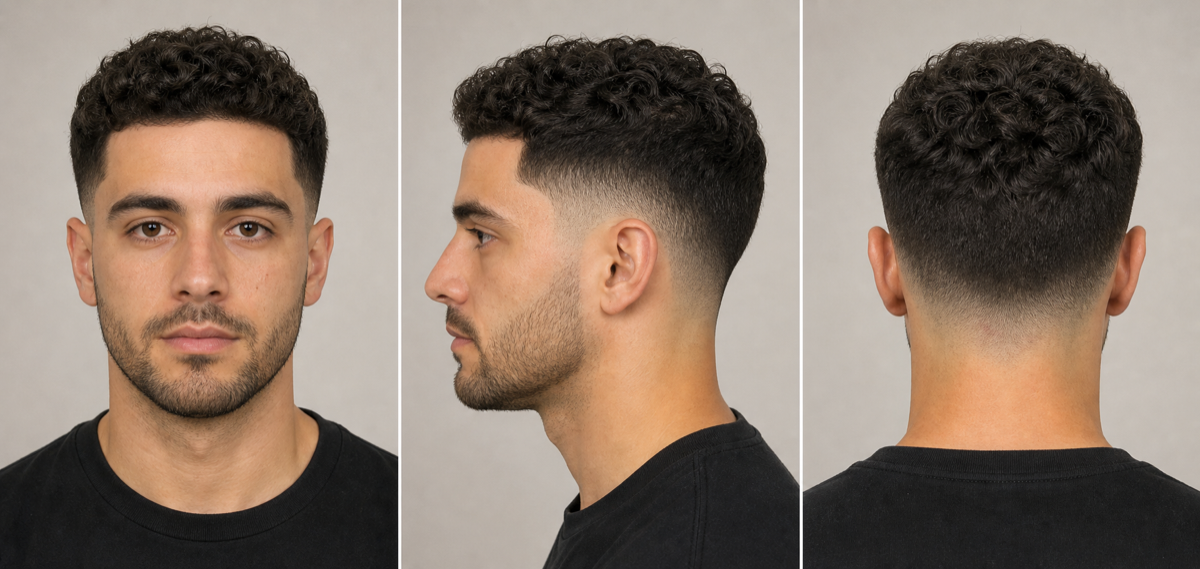
What defines a high taper fade?
A sharper taper that begins higher at the temples while preserving more side weight than a full high fade. The name is only a starting point: placement, shortest length, blend shape and retained weight determine how the finished cut looks.
Hair types and proportions to consider
This style can be a useful option for round faces, defined temples, modern styles. It works with straight, wavy, curly, coily hair when the shape is adjusted for density, growth direction and personal proportions.
The editor opens with High Taper Fade selected and keeps your photo in your browser.
High Taper Fade from front, side and back
Use all three angles with your barber. The side shows transition height, the back shows the blend path and neckline, and the front shows how the top frames the face.
Ad placement
What to ask your barber
Ask for a high taper transition using Skin to #2 through the sides. Keep about 2 to 4 inches on top with defined top texture and a natural taper neckline. Show a side and back reference to settle the blend shape.
Maintenance and styling
Refresh every 2–3 weeks for the cleanest blend. Use a small amount of product suited to your texture and preserve the intended direction rather than flattening the top.
Preview it before the barber
The MensFade editor opens with this style selected. Adjust its position and scale on your photo, compare it with the original, then save a barber instruction card.
Try High Taper Fade on Your PhotoFrequently asked questions
How often should I maintain a high taper fade?
Refresh every 2–3 weeks for the cleanest blend.
What guard should I ask for?
Use Skin to #2 as a starting point, then adapt it to your density and desired contrast.
Can a high taper fade be professional?
Yes. Keep the outline controlled, preserve suitable side weight and choose a natural neckline for a softer result.